

Yuzu and Citrus Pavlova
Recipes to bring colour, and light into your winter kitchen

Last year at this time in January, at e5, we were peeling, juicing, and chopping around 30 kilos of citrus daily. We were making huge amounts of citrus marmalade. This year, it looks a bit different. I took January off and went to Todolí Foundation’s citrus garden in Spain, where I rested and worked on other projects. I am still cooking with citrus, though, just not at that scale.


If you missed it last week, I shared an essay on citrus history and genealogy. As promised, today I’m bringing a few citrus recipes your way—because let’s be honest, a grey London backdrop can feel pretty bleak.
Enter: citrus. Add plenty of coffee, a good playlist in the background, and you’re almost all set to start baking. Cooking with citrus feels like bottling sunshine, and I’m very much flowing with the seasons right now—hoping to tempt you to fill your kitchen counter with colour during these darker winter days.
You’ll find recipes for my go-to citrus pavlova, as well as a wonderfully versatile yuzu and olive oil curd. I’ve used it to fill cakes (including my wedding cake!), and it also works beautifully as a creamy element in plated desserts.
If you’d like to go deeper, I’ve put together a dessert ebook featuring a grapefruit and mint tart, a lemon-plated dessert, and a kumquat and blood orange-plated dessert. The ebook is currently available only in Spanish, but what better excuse to learn some Spanish recipe slang?
As always, thank you so much for your continued support—it truly means a lot. 🍋✨
What I’m reading: Clean by Alia Trabucco Cerán, a chilean author who wrote a thriller narrated by Estela. She is the maid, known as nana in Chile, and the narrator makes you feel several emotions at the same time. This book is as disturbing as profound, exploring the domestic work, class and violence in Chile.
What I’m listening to: Fires have been devastating this summer in Chile and Argentina, and I feel helpless. I have been mostly listening to Chilean news. If you want to help, you can donate here.
Now, let’s dive into the recipes…
Citrus Pavlova
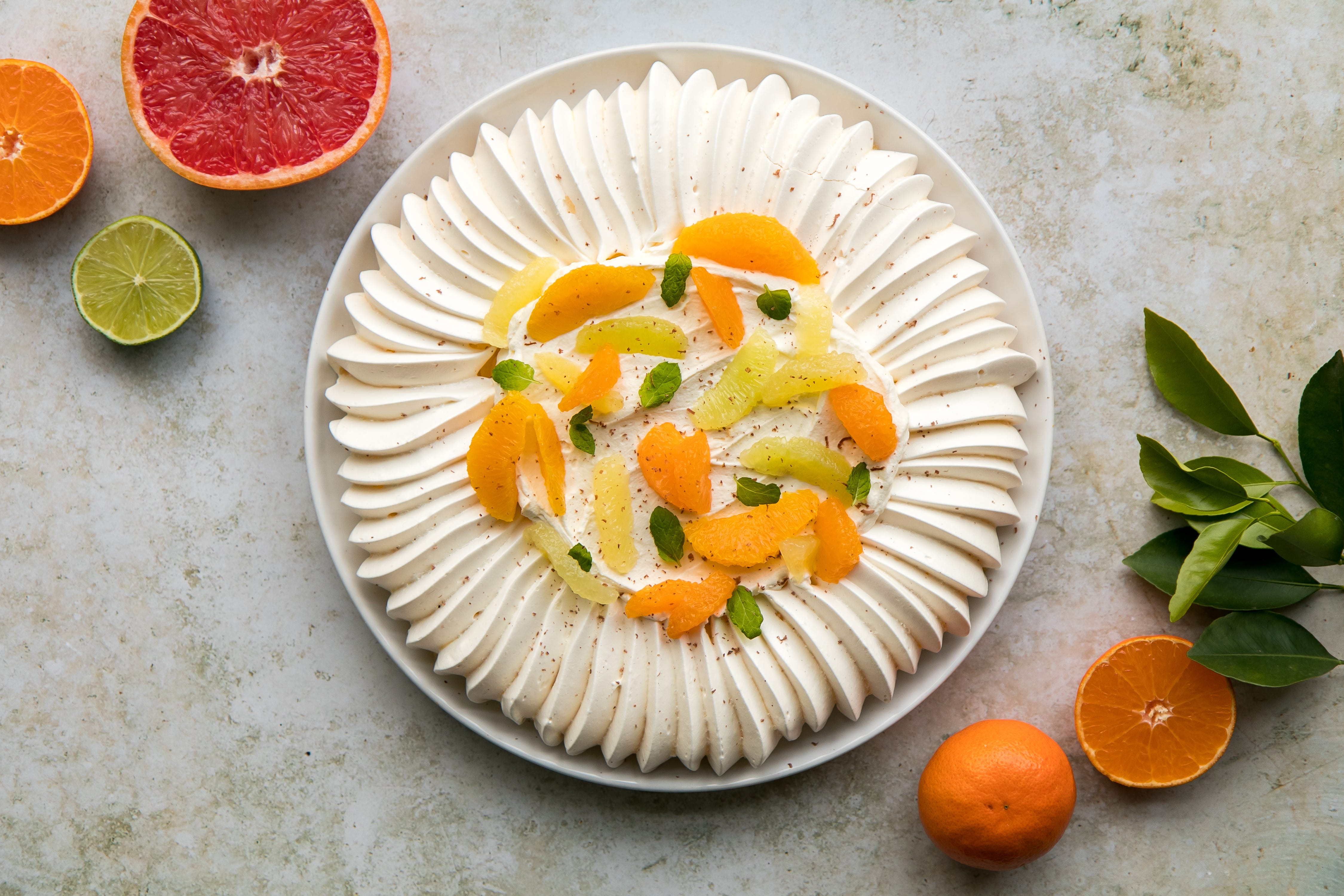
When I lived in Santiago, pavlova and tres leches were my best sellers. Pavlova, especially, was easy peasy for me — one of those recipes I could make with my eyes half-closed and still feel smug about it.
Then I moved to the UK… and suddenly my foolproof pavlova completely betrayed me.
I’d love to say I immediately understood what was wrong, but the truth is it took me a while. I tested everything. I blamed the oven (many times). It cracked. A few times it collapsed. And it always — always — ended up soggy.
So I started changing one thing at a time. My main theory was humidity. The UK is so much more humid than Chile, and Santiago is incredibly dry. Dry enough that when I baked macarons there, I didn’t even bother letting them rest before going into the oven.
What was happening in the UK was that my pavlova was absorbing too much moisture from the air. Once I realised that, things started to make sense. I adjusted the recipe again and again — many, many times — until one day… it finally worked. I know people in the UK don’t think humidity affects their cooking, but I disagree. Probably because I have the experience of baking in Santiago, which is so dry (it is so dry that when I am there, my skin cracks. By the way, we have the driest desert in the world). So when I mean dry, it’s DRY.
I tried a lot of things along the way, which means I now understand pavlova a little better than I used to. And that’s what I want to share with you. You can see a reel I did a while ago about this recipe.


Citrus Pavlova Recipe (Humidity-Proof-ish Version)
Ingredients for 8-10 people
